Monitoring fish populations (DCE)
 Accessing metadata |  View on a map |  |
Context
Fish are naturally present in the majority of French lakes, with the exception of high altitude lakes and certain geographically isolated lakes, where they have nevertheless frequently been introduced by man. Generally located at the top of aquatic trophic chains, fish populations help to control the lower links and the ecological functioning of lake ecosystems.
Because of the ecological preferences of different species, the composition of fish populations (presence, abundance, size distribution, etc.) is conditioned by the physical and chemical characteristics of the environment and is likely to be impacted by the pressures exerted by man. Some introduced or exotic species can also cause major ecological imbalances.
Organisms with a well-known ecology, fish are one of the four biological quality elements used to assess the status of water bodies under the WFD, through two indicators: the IIL (Indice Ichtyofaune Lacustre, for natural lakes) and the IIR (Indice Ichtyofaune Retenue, for artificial reservoirs).
Description
Fish inventory data is collected as part of the regulatory monitoring networks (RCS and RCO) using multi-mesh gillnet sampling. The protocol, known as the "Nordic" or "Scandinavian" protocol, follows the recommendations of European standard EN 14757:2005 (Water quality - Sampling of fish using gillnets), which meets the regulatory requirements set out in the WFD.
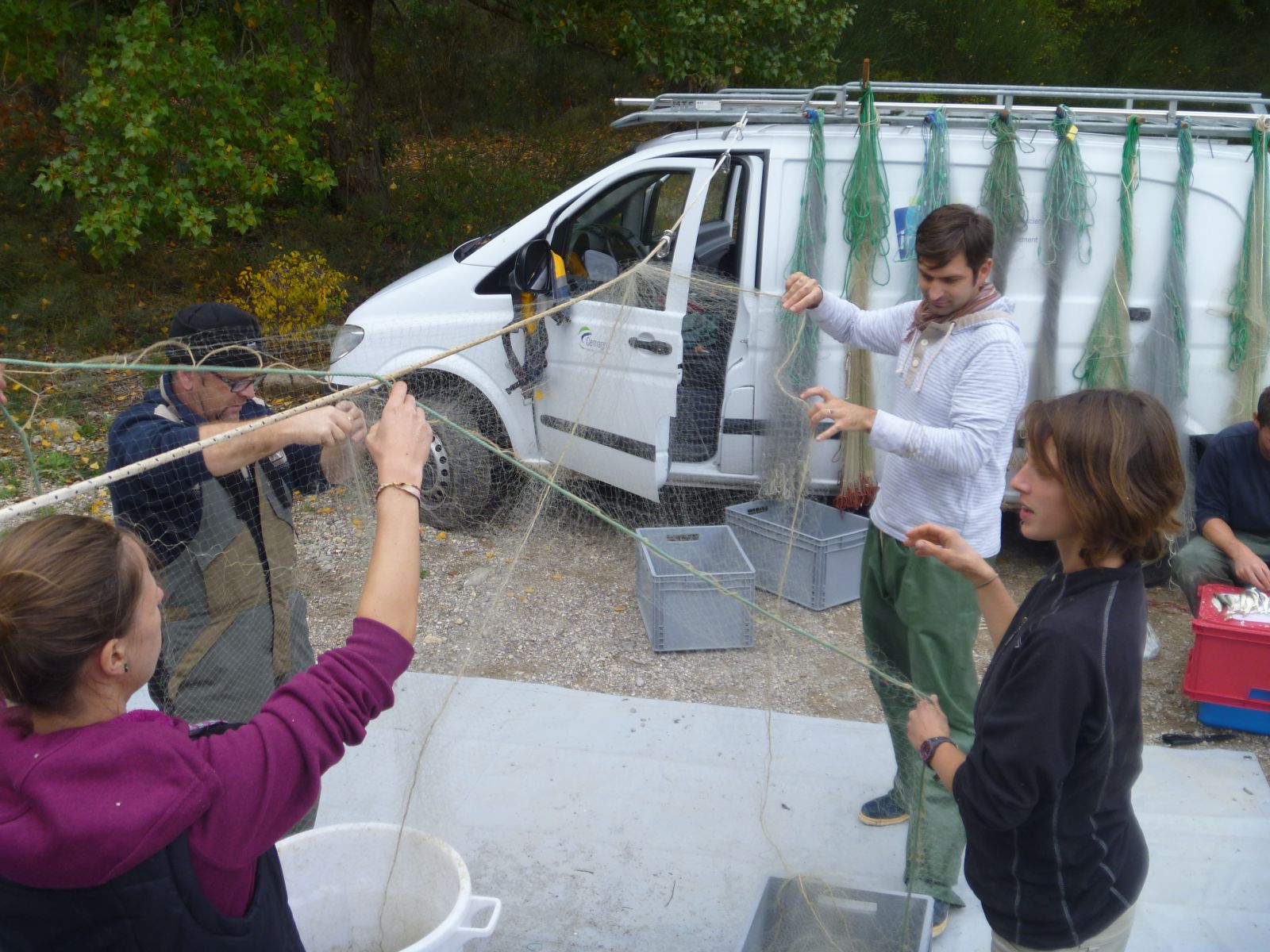
The nets are positioned at random, on the bottom (benthic nets) or in the water column (pelagic nets), in different depth ranges. The number of nets to be set in each depth range is determined according to the surface area and maximum depth of the lake, as well as the level of oxygenation of the bottom. They are set at the end of the day and hauled out the next morning, so that each net has a total fishing time of around 12 hours.
At the relay, the fish are stripped, identified to species, weighed and measured, either individually or in batches, when conditions require or allow (excessive numbers of fish, presence of many juveniles, very homogeneous catches, etc.). Depending on conditions and constraints, a fishing campaign often takes place over several days.